
Critters of Coastal Alabama —
The Beneficial Bugs of the Eastern Shore
You’ll almost certainly never meet them — and that’s exactly the point. Behind the scenes, the Eastern Shore is looked after by a quiet crew of small creatures that do their work out of sight: in the treeline, along the water, after dark. They keep this stretch of coast healthy without ever asking for your attention. And on the rare occasion one does turn up, it’s a small, happy moment — a sign you’ve landed somewhere genuinely alive.
A few are quietly working in your favor. The dragonfly patrols the water and eats mosquitoes by the hundreds — fewer bites for you, and a reliable sign of clean water. Out in the garden, the lacewing larva — the charming little “junk bug” that wears a coat of debris — devours aphids by the dozen, nature’s own pest control. And the harmless, silent camel cricket spends its days in the damp shade, turning fallen leaves back into soil.


Others are simply small wonders to stumble on. A cicada shell left on a fence post, proof of an insect that spent years underground before climbing into the light. The eastern eyed click beetle, wearing two fake eyes and able to snap itself into the air. The slow, striking eastern lubber grasshopper. And, on a lucky summer night, one of the beauties: the sulfur-yellow Io moth with its dark eyespots, or the big, soft black witch moth drifting up from the tropics.

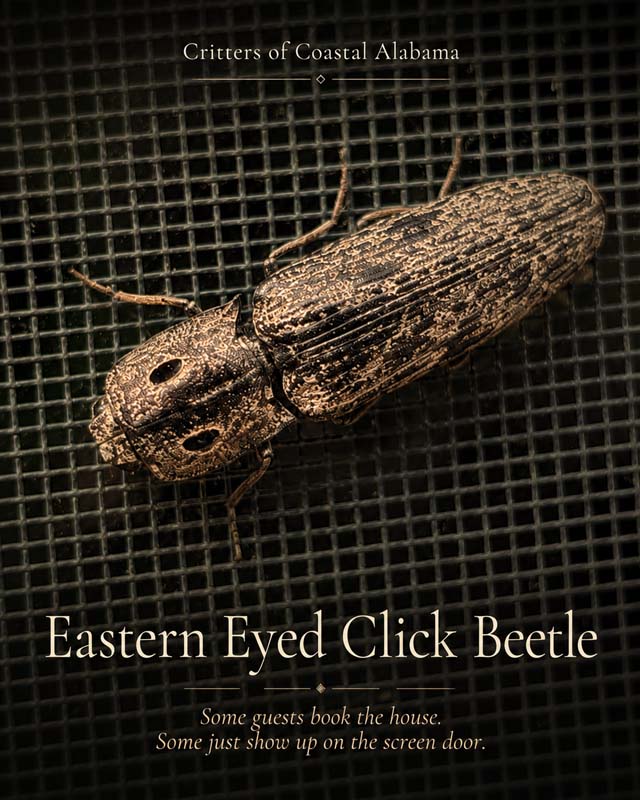
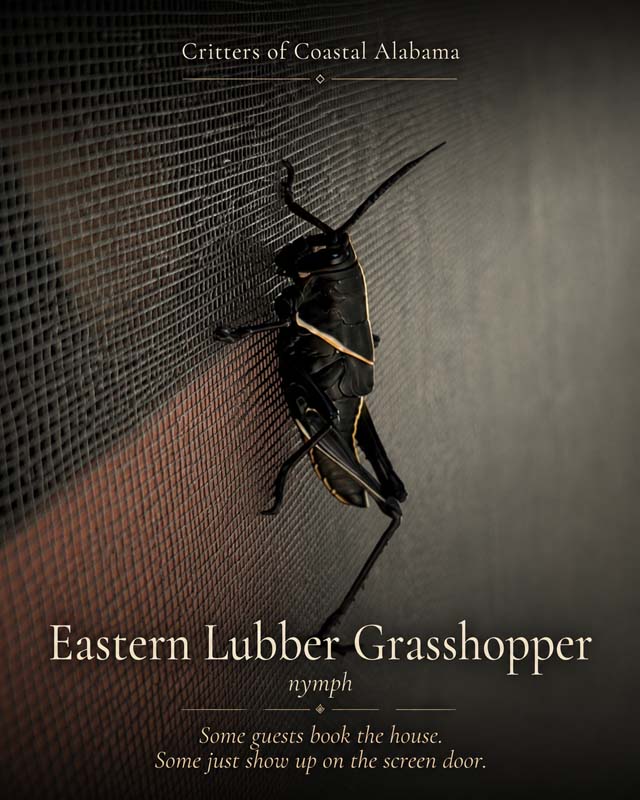
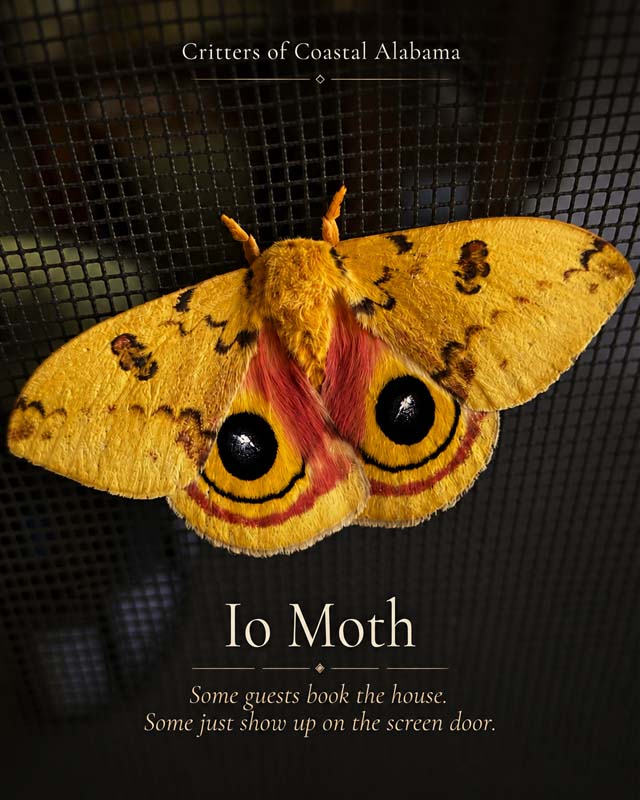
You could spend your whole stay never noticing a single one, and the place would feel all the better for it. But keep half an eye out — because spotting one here isn’t a bug problem. It’s a small gift from a healthy piece of the Eastern Shore.